
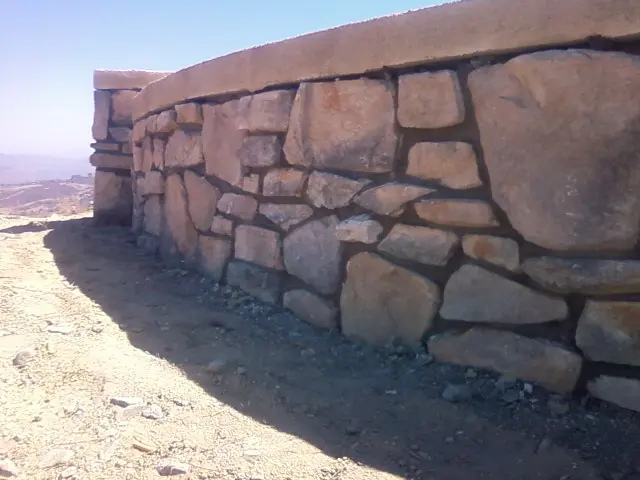
Block Wall Contractors San Diego — Built to Code, Built to Last
Every block wall we build meets CBC Chapter 21 seismic standards and uses ASTM C90 rated CMU blocks — because San Diego's Seismic Design Category D classification demands it. Shaun Bagwell Masonry is a C-29 licensed masonry contractor (CSLB #979389) with over 25 years of masonry experience, serving San Diego homeowners and businesses since 2012. Call (619) 581-2492 — you reach the owner directly.
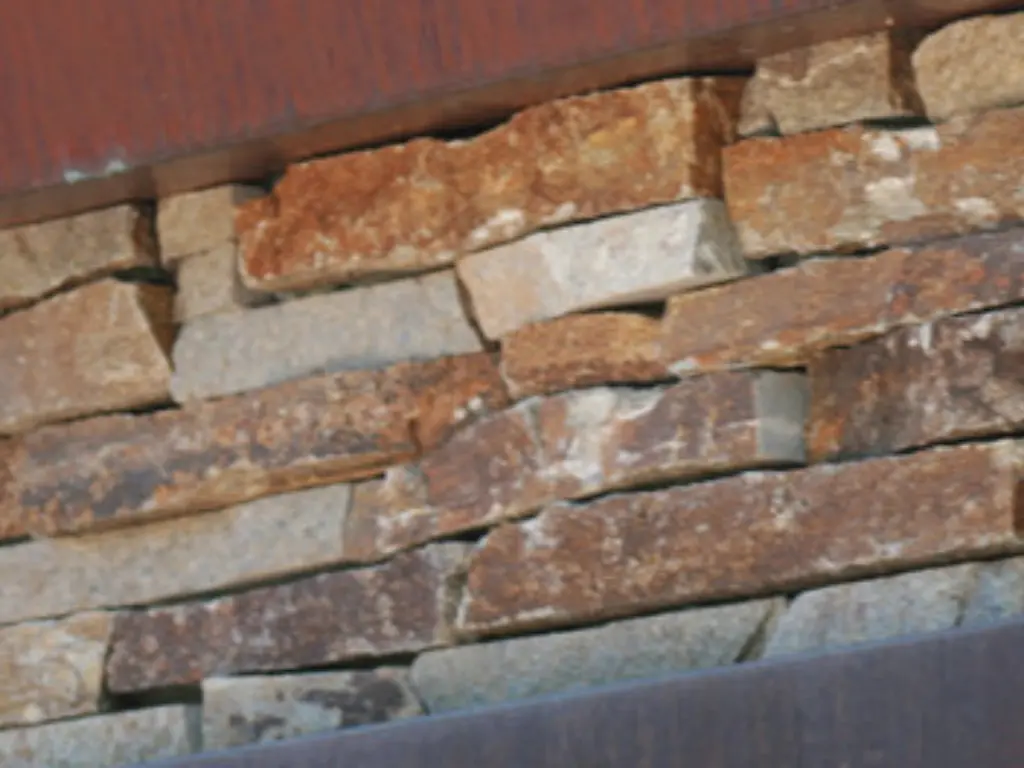
Why San Diego Properties Need Block Walls — Not Wood Fences
A wood fence in San Diego lasts 15 to 20 years before termite damage, dry rot, or sun exposure forces a full replacement. A properly built CMU block wall lasts 50 years or more with almost zero maintenance. In a market where the median home price sits near $900,000, that difference matters.
50-Year Service Life
San Diego climate · termite + UV exposureSound Transmission Class — What Actually Blocks Freeway Noise
Higher STC = more decibels stopped at the wallAn 8-inch CMU block wall provides a Sound Transmission Class (STC) rating of approximately 50 — meaning it blocks roughly 50 decibels of sound. A standard wood fence manages an STC of about 20 to 25. For properties along I-8, I-15, I-5, or SR-163, that difference is the difference between hearing freeway noise and not.
Seismic Strength That Wood Cannot Match
San Diego's Seismic Design Category D classification means every structure on your property faces real earthquake risk. A reinforced CMU block wall — with vertical rebar grouted into the cells and horizontal bond beams tying the structure together — absorbs and distributes seismic forces in ways that a wood fence never can. We build every wall to CBC Section 2104 standards, with reinforcement spacing and grouting designed for San Diego's seismic loading requirements.
Fire Resistance in Wildfire-Prone Areas
San Diego County contains thousands of properties in Very High Fire Hazard Severity Zones — from Alpine and Ramona to parts of San Carlos and Lakeside. The County Building Code requires that any portion of a fence within 5 feet of a building in these zones be constructed of non-combustible material. CMU block is inherently fireproof. Wood is not.
Termite-Proof, Salt-Air Durable, Noise Reducing
San Diego's subterranean termite pressure is among the highest in California. Block walls eliminate that risk entirely. For coastal properties in Pacific Beach, Point Loma, and La Jolla, CMU resists salt-air corrosion far better than wood or vinyl — especially when built with Type S mortar for higher bond strength and moisture resistance.
Block Wall Types We Build Across San Diego County
Not every block wall serves the same purpose. We build each type to match the structural requirements, height regulations, and finish expectations specific to your property and neighborhood. Filter by what your project needs.
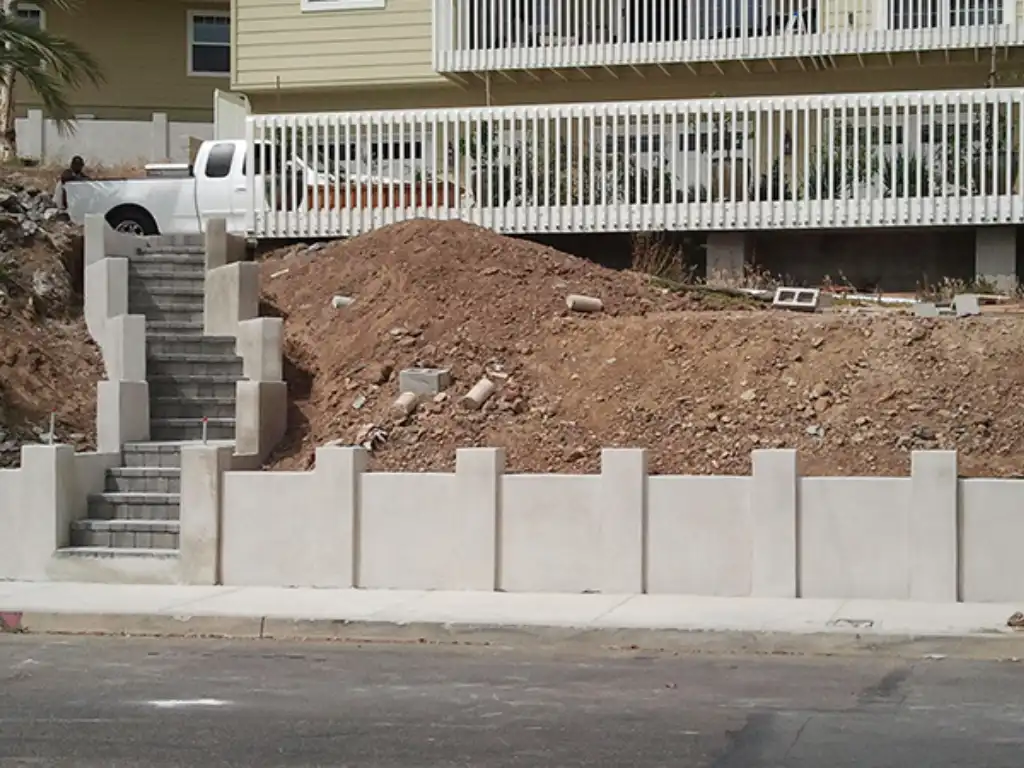
Privacy Walls
The most common residential block wall in San Diego. Typically 5 to 6 feet tall, built along side and rear property lines to block sightlines between neighboring homes. Finished with stucco, split-face block, or slump stone to match your home's exterior. Common in neighborhoods throughout El Cajon, Mission Valley, Tierra Santa, and South Bay communities like Chula Vista and National City.
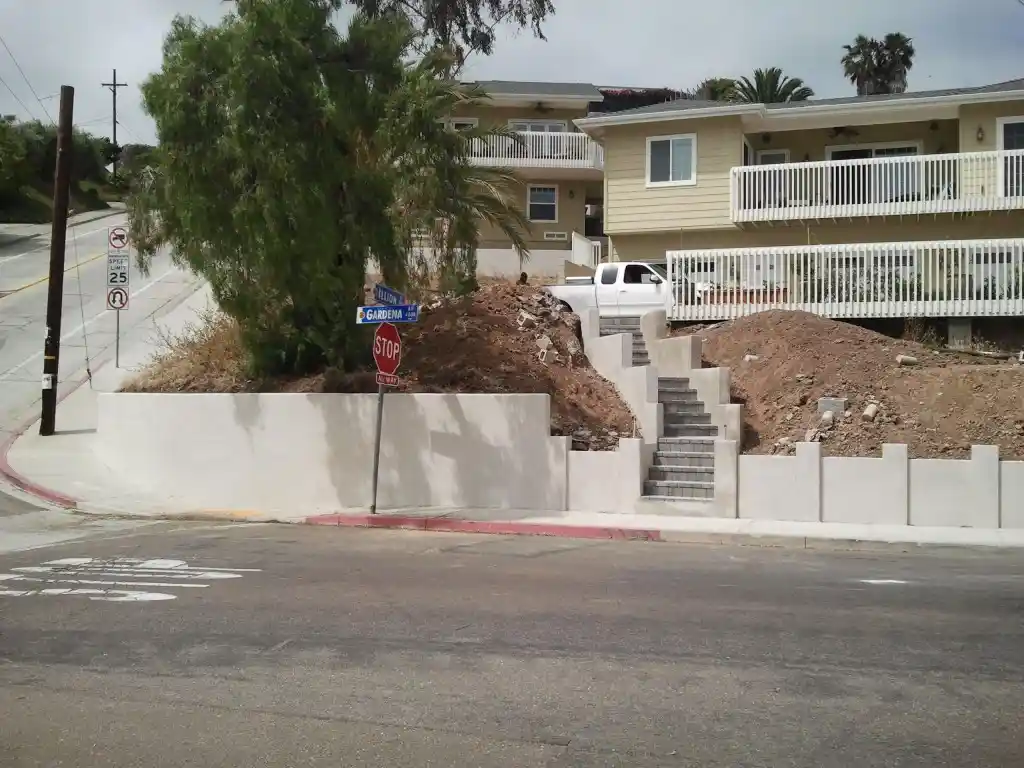
Property Line Walls
Property boundary walls define your lot and provide security. Under California's Good Neighbor Fence Act (Civil Code §841), adjoining property owners share the cost of building or replacing a boundary fence or wall equally — unless one side proves that arrangement is unfair. We help you navigate that process, including the required 30-day written notice to your neighbor before construction begins.
Sound Walls
Noise reduction walls for properties near freeways, busy arterials, or commercial zones. Typically 6 to 8 feet tall, built with 8-inch CMU blocks that achieve the STC 50 rating needed to meaningfully reduce traffic noise. Stucco or split-face finishes provide a clean look on both sides.
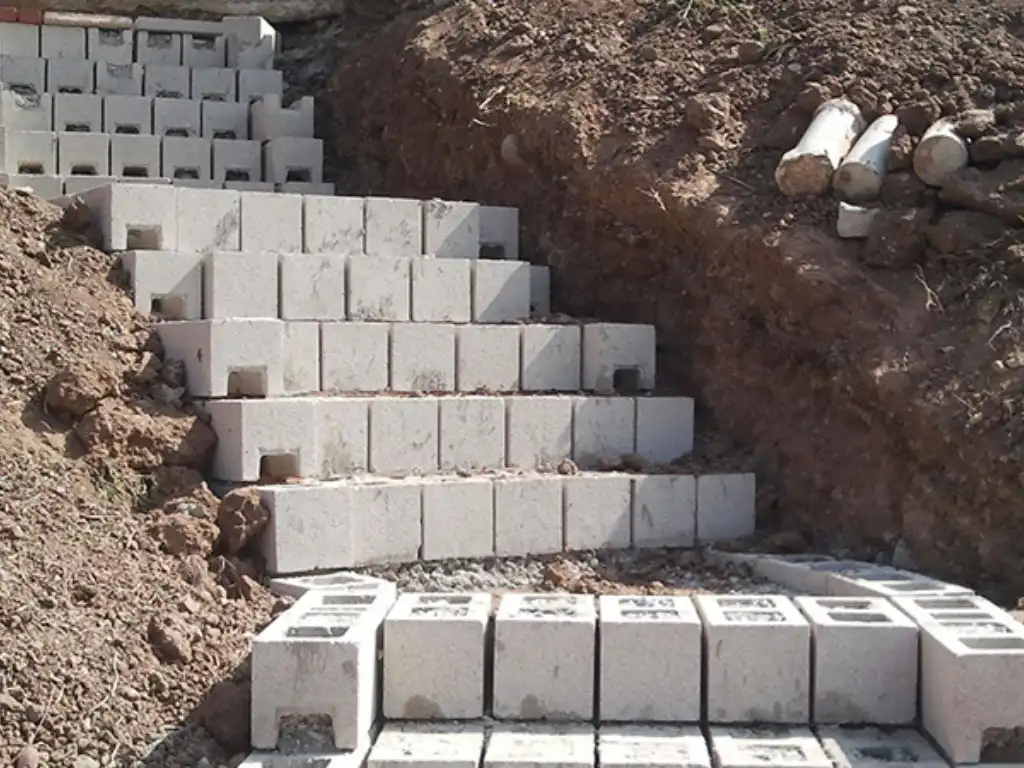
Retaining Block Walls
When your block wall also holds back soil or manages a grade change, it becomes a retaining wall — with significantly different engineering, drainage, and footing requirements. Walls retaining earth over 3 feet require a building permit and typically need engineered plans.
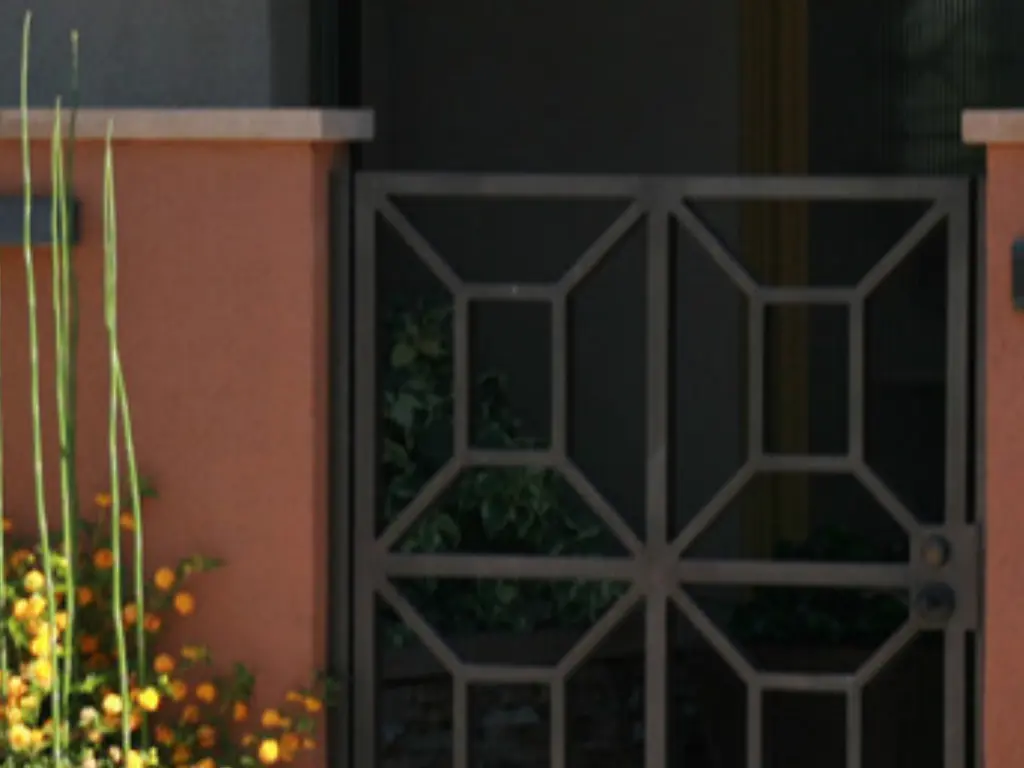
Screen & Breeze Block Walls
Decorative block walls that allow airflow and filtered light while providing partial privacy. Popular in San Diego's mid-century modern neighborhoods in Kensington, North Park, and University Heights, where the original 1950s and 1960s architecture featured decorative concrete screen patterns.
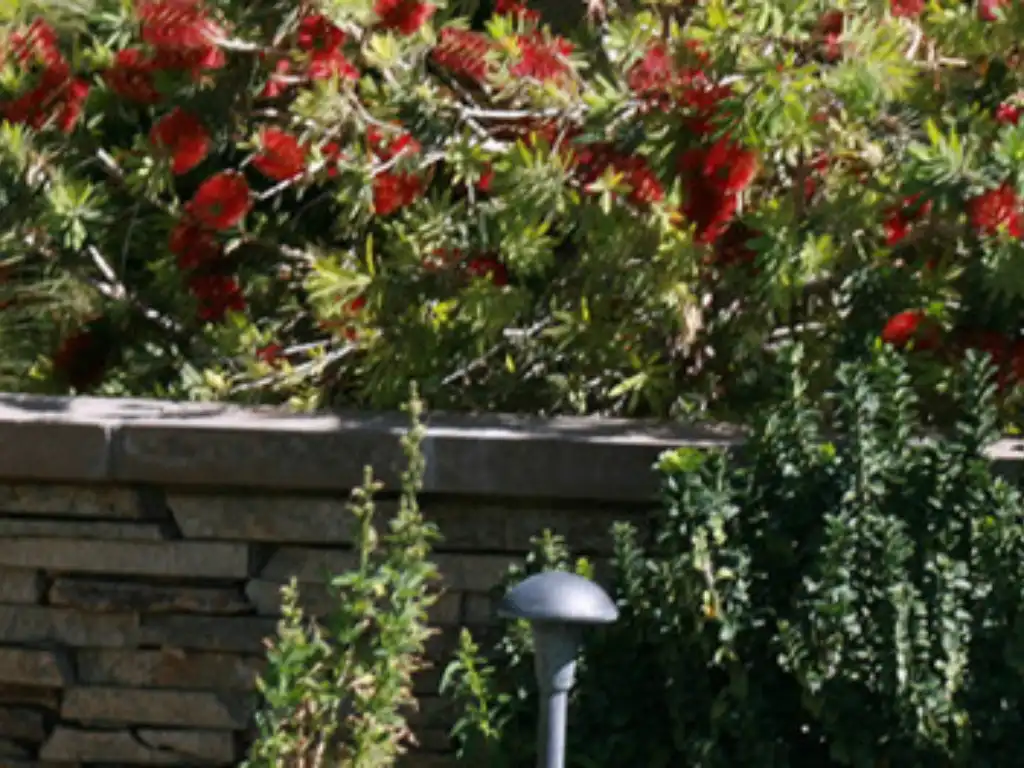
Garden & Planter Walls
Low walls under 3 feet used to border landscape beds, define outdoor living areas, and create raised planters. These typically do not require a building permit in San Diego, but still benefit from proper footing and drainage to prevent settling and cracking over time.
No wall types in this category.
How We Build Block Walls in San Diego
Building a block wall in San Diego is not the same as building one in Phoenix or Dallas. Our seismic classification, soil conditions, and coastal exposure require specific engineering, materials, and construction methods. Tap any point on the wall to see what goes into it.
Caps, Finish & Drainage
The top of every block wall gets a concrete or stone cap with a proper drip edge — this prevents water from penetrating the top course and corroding the reinforcement inside. Finish options include smooth stucco, knockdown texture, split-face exposed block, slump stone, or stone veneer application.
Horizontal Bond Beam Reinforcement
Horizontal bond beam reinforcement runs at the top of the footing, at the top of the wall, and at intermediate heights per engineering specifications. Minimum total horizontal reinforcement area is 0.001 times the wall's sectional area (CBC Section 2106A.1.3), spaced no more than 4 feet on center — this is what ties the wall together and distributes seismic load along its length.
Reinforcement & Seismic Compliance
California Building Code Chapter 21A requires masonry structures in Seismic Design Category D to comply with Chapter 7 of TMS 402. Vertical rebar is grouted into the cells at spacing determined by the wall's height and loading — typically every 24 to 48 inches on center — and every cell containing reinforcement is grouted solid. We do not treat these requirements as optional upgrades.
Drainage Where the Wall Meets Grade
Where the wall meets grade, we install weep holes or drainage provisions to prevent moisture buildup behind or beneath the wall. Trapped water is what cracks caps, stains stucco, and corrodes reinforcement — so drainage is designed in from the first course, not added later.
Footings & Foundation
Every block wall sits on a concrete footing. The footing width, depth, and reinforcement depend on the wall height, soil conditions, and any loads the wall carries. In San Diego's expansive clay soils — particularly prevalent in the coastal plains, Mission Valley, and the marine terraces through Kearny Mesa and Tierra Santa — footing design must account for seasonal soil movement.
Prepared Subgrade & Gravel Base
We never pour a footing on unprepared soil or skip the gravel base that allows drainage beneath the foundation. In seasonally expansive San Diego clay, that base is the difference between a wall that stays plumb for fifty years and one that telegraphs every wet winter through its stucco.
CMU Block Specifications ASTM C90
We use loadbearing concrete masonry units that comply with ASTM C90 — the national standard for CMU blocks. These units must meet a minimum net area compressive strength of 2,000 psi (13.8 MPa). The standard 8×8×16-inch block is the most common size for residential walls in San Diego, available in normal weight, medium weight, and lightweight classes depending on the application.
Mortar Selection TYPE S
San Diego's climate and exposure conditions determine which mortar type performs best. We primarily use Type S mortar — which provides higher bond strength and better moisture resistance than Type N — making it the right choice for San Diego's combination of seismic stress, coastal humidity, and expansive clay soils. For non-structural applications above grade, Type N may be appropriate, and we specify accordingly on every proposal.
Every wall, every time. Vertical rebar at engineered spacing, bond beams at the footing, top and intermediate heights, all reinforced cells grouted solid — these are code-mandated for every block wall in San Diego County, not optional upgrades.
Ready to Build Your Block Wall?
Whether you need a privacy wall for your backyard in El Cajon, a property line wall in San Carlos, a sound wall along a busy street in Mission Valley, or a decorative screen wall for a mid-century home in North Park — Shaun Bagwell Masonry builds it to last.
Written, itemized proposals on every project — and we respond within one business day.
Call the owner direct(619) 581-2492