
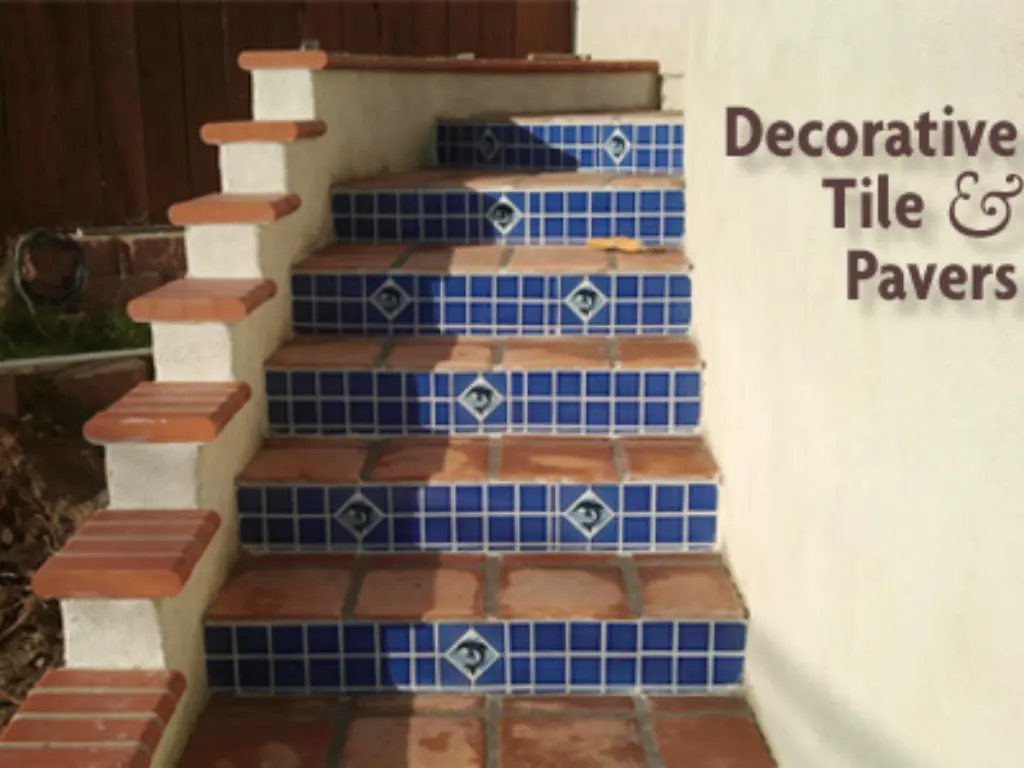
Paver and decorative tile installation by Shaun Bagwell Masonry in San Diego
C-29 Licensed · CSLB #979389 · ICPI Standards

San Diego Paver Installation — Driveways, Patios, Walkways & Pool Decks

Interlocking pavers flex with San Diego's expansive clay soils instead of cracking like poured concrete — and if a single unit gets damaged, you replace one piece, not the whole surface. We install concrete pavers, clay brick, travertine, porcelain, and permeable paver systems to ICPI standards with proper base compaction, edge restraints, and drainage design. Shaun Bagwell Masonry is a C-29 licensed masonry contractor (CSLB #979389) with over 25 years of experience building hardscape surfaces across San Diego County. Call (619) 581-2492 — you reach the owner directly.

Scroll to explore
8,000PSI ASTM C936
98%Base Compaction
30–50Year Lifespan
40%Permeable Growth
Applications

Where We Install Pavers Across San Diego

Pavers are not just for patios. We install paver systems across every hardscape surface on your property — each with the correct paver thickness, base depth, and pattern for the load it carries.

Patios & Outdoor Living

The most common residential paver project in San Diego. Concrete, brick, or natural stone pavers for patios create a durable entertaining surface that lasts 30 to 50 years with almost zero maintenance. Standard 60mm (2⅜-inch) pavers are appropriate for all pedestrian patio applications.

60mm pavers30–50 yr lifePedestrian load

Driveways & Motor Courts

Driveways require 80mm (3⅛-inch) thick pavers rated for vehicular loads — using 60mm pavers on a driveway leads to cracking under repeated tire pressure. We install herringbone patterns on all driveway surfaces because this interlocking arrangement resists lateral creep under turning and braking forces better than any other layout. For concrete driveway alternatives, pavers offer superior repairability and curb appeal.

80mm paversHerringbone onlyVehicular rated

Walkways, Garden Paths & Entries

Front walkways and garden paths create the first impression of your home. Standard 60mm pavers on a properly compacted base provide a stable, level walking surface that will not shift or settle the way loose stepping stones do over time.

60mm paversCompacted baseNo shifting

Pool Decks & Surrounds

Poolside pavers need slip resistance, cool surface temperature, and proper drainage slope. Travertine pavers stay 20 to 30 degrees cooler than dark concrete in direct sun — the preferred choice for San Diego pool decks. We install with non-slip finishes and slope the surface away from the pool coping to prevent standing water.

Travertine20–30° coolerNon-slip finish

Steps, Landings & Transitions

Where pavers meet elevation changes, retaining walls, or doorway thresholds, proper transitions prevent trip hazards and water intrusion. We integrate paver landings with masonry steps, block walls, and stone risers — work that requires masonry expertise beyond standard paver installation.
Masonry integrationNo trip hazardsWater managed
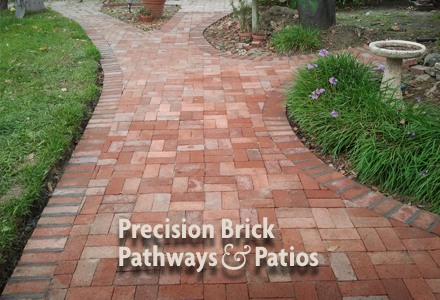
Brick paver walkway installed by Shaun Bagwell Masonry in San Diego
Brick paver walkway · San Diego
Materials

Paver Types for San Diego's Climate

Five paver families, each with a different strength, surface temperature, and maintenance rhythm. Pick one to compare.

Most popular · ASTM C936

Concrete Interlocking Pavers

The most popular choice in San Diego. Available in hundreds of shapes, colors, and textures. Concrete pavers meeting ASTM C936 deliver a minimum compressive strength of 8,000 psi — far stronger than poured concrete. They resist salt-air corrosion, handle UV exposure without structural degradation, and individual units can be replaced if damaged.

Patios $18 – $30 / sq ftDriveways $24 – $408,000 psiUnit-replaceable
Installed cost$18 – $30 / sq ft
Compressive strength8,000 psi min.
Underfoot heat in full sunWarm — darker colours hold heat
Fired clay · 100+ years

Clay Brick Pavers

Fired-clay brick delivers a warm, classic look that pairs naturally with San Diego's Spanish Colonial, Craftsman, and Mediterranean architecture found throughout North Park, Kensington, Hillcrest, and Mission Valley. Brick pavers can last over 100 years. One consideration: clay brick can develop efflorescence — a white chalky deposit — especially in coastal areas. Proper sealing prevents this.

100+ year lifespanSeal against efflorescenceSpanish Colonial fit
Installed costMid-range
Expected lifespan100+ years
Underfoot heat in full sunWarm
Pool decks · barefoot comfort

Travertine Pavers

Natural limestone that stays significantly cooler underfoot than concrete or porcelain in direct sun. Best for pool surrounds, south-facing patios, and outdoor dining areas where barefoot comfort matters. Travertine requires sealing every 3 to 5 years — especially at coastal properties in Pacific Beach and Point Loma where salt air accelerates moisture absorption.

20–30° coolerSeal every 3–5 yrsPool surrounds
Installed costPremium
Expected lifespan50+ years
Underfoot heat in full sunCoolest — 20–30° below concrete
Stain-proof · outdoor kitchens

Porcelain Pavers

Modern, stain-proof, and fade-proof. Porcelain resists oil, wine, and food stains better than any natural material — ideal for outdoor kitchens and entertaining areas. However, porcelain requires a more robust base (often a concrete sub-slab) because the material is thinner and less forgiving of base movement.

$30 – $45 / sq ftStain & fade proofNeeds a robust base
Installed cost$30 – $45 / sq ft
Stain resistanceHighest of any material
Base toleranceLeast forgiving — sub-slab often needed
Stormwater · DS-560

Permeable Pavers

Designed with wider joints that allow rainwater to infiltrate into a prepared aggregate reservoir below the surface. Permeable paver installations have increased 40 percent in popularity across San Diego, driven by city stormwater management incentives and the DS-560 compliance requirements. We design permeable systems that meet the City's Standard or Priority Development Project (PDP) path requirements.

Patios $26 – $45 / sq ftDriveways $32 – $50DS-560 checklist+40% demand
Installed cost$26 – $50 / sq ft
Stormwater infiltrationHighest — reservoir base
Popularity growth in San Diego+40%
Transparent Pricing

What Pavers Cost in San Diego — 2026 Pricing

Choose the surface and drag the size slider for a planning number, then check the full price guide below.

1 · Application
2 · Surface area 400 sq ft
80 sq ft790 sq ft1,500 sq ft
Planning estimate
$7,200 – $12,000

Paver patio (concrete) · 400 sq ft

  • Paver system installed$7,200 – $12,000
  • Demolition & haul-awayNot included
  • Cost per square foot$18 – $30

Includes excavation, base material, compaction, bedding sand, pavers, edge restraints, polymeric sand, and final compaction. Tight access in older neighborhoods like Hillcrest, El Cajon, or Tierra Santa may add labor for hand-carrying materials.

Get This Priced Exactly →

2026 San Diego Paver Price Guide

Installed · base + bedding + pavers + restraints
ApplicationInstalled cost (per sq ft)
Paver patio (concrete pavers)$18 – $30
Paver patio (porcelain)$30 – $45
Paver driveway (concrete, 80mm)$24 – $40
Paver driveway (porcelain)$40 – $75
Paver walkway$18 – $28
Permeable pavers (patio)$26 – $45
Permeable pavers (driveway)$32 – $50
Paver repair / relaying$8 – $15
Prices include excavation, base material, compaction, bedding sand, pavers, edge restraints, polymeric sand, and final compaction. Demolition of existing surfaces adds $2 to $6 per square foot.

Installed cost per square foot

San Diego · 2026
Paver repair / relaying
$8 – $15
Paver walkway
$18 – $28
Paver patio (concrete)
$18 – $30
Paver driveway (80mm)
$24 – $40
Permeable (patio)
$26 – $45
Permeable (driveway)
$32 – $50
Porcelain driveway
$40 – $75
$0$37.50$75

What Drives the Cost

Paver materialBiggest factor
Thickness & base depth60mm vs 80mm
Site accessHand-carry labour
Demolition$2 – $6 / sq ft

Demolition of existing surfaces adds $2 to $6 per square foot. Tight access in older neighborhoods like Hillcrest, El Cajon, or Tierra Santa may add labor costs for hand-carrying materials.

Pavers vs. Poured Concrete

Poured concrete25 – 30 yrsCracks as one slab · lower upfront
VS
Pavers30 – 50 yrsFlexes · single units replaceable

Pavers flex with soil movement instead of cracking as a single slab. Damaged units can be individually replaced. There are no control joints to collect dirt. And pavers can be lifted to access buried utilities, then relaid — impossible with poured concrete.

Installation Method

How We Install Pavers — Built for San Diego Soil

Every paver failure we see on repair calls traces back to one of three causes: poor base compaction, missing edge restraints, or wrong paver thickness. We eliminate all three on every project — tap a layer to see how.

Interactive build-up — tap a numbered layer
house expansive native clay — excavated from the base zone 4–6 in 98% Proctor density · ASTM D698 1 2 3 4 5 6 ICPI-standard paver build-up · not to scale
Layer 01 — Class II road base

Base Preparation

San Diego's expansive clay soils demand proper base construction — not shortcuts. We excavate to the engineered depth, remove native clay from the base zone, and install 4 to 6 inches of Class II road base aggregate compacted to 98 percent standard Proctor density per ASTM D698.

4–6 in Class IIASTM D698Engineered depth
Patterns That Perform

Pattern Selection Is Not Purely Aesthetic

It affects structural performance. Tap a pattern to see where it belongs.

Herringbone (45-degree or 90-degree) is the strongest pattern for any surface that carries vehicular loads, because the interlocking arrangement distributes force across multiple units and resists lateral creep. We install herringbone on every driveway regardless of material type.

Running bond works well for patios, walkways, and pool decks where pedestrian traffic is the primary load — a clean, linear layout that reads larger on narrow surfaces and cuts efficiently against straight edges.

Basketweave suits patios, pool decks, and traditional garden surfaces carrying pedestrian loads. Paired units alternate direction for a classic look that pairs naturally with brick and Spanish Colonial architecture.

Installation Method

How We Install Pavers — Built for San Diego Soil

Every paver failure we see on repair calls traces back to one of three causes: poor base compaction, missing edge restraints, or wrong paver thickness. We eliminate all three on every project — tap a layer to see how.

Interactive build-up — tap a numbered layer
house expansive native clay — excavated from the base zone 4–6 in 98% Proctor density · ASTM D698 1 2 3 4 5 6 ICPI-standard paver build-up · not to scale
Layer 01 — Class II road base

Base Preparation

San Diego's expansive clay soils demand proper base construction — not shortcuts. We excavate to the engineered depth, remove native clay from the base zone, and install 4 to 6 inches of Class II road base aggregate compacted to 98 percent standard Proctor density per ASTM D698.

4–6 in Class IIASTM D698Engineered depth
Patterns That Perform

Pattern Selection Is Not Purely Aesthetic

It affects structural performance. Tap a pattern to see where it belongs.

Herringbone (45-degree or 90-degree) is the strongest pattern for any surface that carries vehicular loads, because the interlocking arrangement distributes force across multiple units and resists lateral creep. We install herringbone on every driveway regardless of material type.

Running bond works well for patios, walkways, and pool decks where pedestrian traffic is the primary load — a clean, linear layout that reads larger on narrow surfaces and cuts efficiently against straight edges.

Basketweave suits patios, pool decks, and traditional garden surfaces carrying pedestrian loads. Paired units alternate direction for a classic look that pairs naturally with brick and Spanish Colonial architecture.

Permits & Code

San Diego Paver Permits

Most paver installations on private property — patios, walkways, and backyard surfaces — do not require a building permit in the City of San Diego. These are the four cases that change that.

IB-165 Driveway apron

The flared section connecting your driveway to the street curb belongs to the City. If your paver project modifies the apron or sidewalk, a Minor Right-of-Way Permit (IB-165) is required.

DS-560 Permeable pavers

The DS-560 Storm Water Requirements Applicability Checklist determines whether your project follows the Standard path or the Priority Development Project path. If an underdrain discharges to the public right-of-way, a separate ROW permit applies.

200 cu yd Grading trigger

Moving more than 200 cubic yards of soil triggers a grading permit. And if your paver surface requires a retaining wall over 3 feet to create a level area, separate permits and engineering apply.

No permit Usually Exempt

  • Paver patios on private property
  • Walkways, garden paths and entries
  • Backyard hardscape surfaces
  • Driveways that stay entirely on private property

Permit When Permits ARE Required

  • Driveway apron: modifying the apron or sidewalk needs a Minor Right-of-Way Permit (IB-165)
  • Permeable pavers: DS-560 checklist decides Standard vs. Priority Development Project path; an underdrain discharging to the right-of-way needs a separate ROW permit
  • Grading: moving more than 200 cubic yards of soil
  • Retaining walls: a wall over 3 feet to create a level area needs separate permits and engineering

We handle all permit requirements and inspection coordination when they apply to your project.

Answers

Frequently Asked Questions

Cost, permits, patterns and timelines — what San Diego homeowners ask before they build.

Concrete paver patios typically cost $18 to $30 per square foot installed. Driveways run $24 to $40 per square foot because they require thicker 80mm pavers and a deeper base. Permeable pavers cost $26 to $50 per square foot depending on the application. We provide a free written estimate with exact pricing for your project.

For most San Diego applications, yes. Pavers flex with soil movement instead of cracking as a single slab. Damaged units can be individually replaced. There are no control joints to collect dirt. And pavers can be lifted to access buried utilities, then relaid — impossible with poured concrete. Poured concrete costs less upfront but typically lasts 25 to 30 years versus 30 to 50 for pavers.

A standard 300 to 500 square foot patio takes 3 to 5 days. A full driveway replacement takes 1 to 2 weeks including demolition of the existing surface. We include a clear timeline in every proposal.

If the project stays entirely on your private property, generally no. If it modifies the driveway apron or sidewalk — which the City of San Diego owns — a Minor Right-of-Way Permit (IB-165) is required. We advise on this during every driveway estimate.

Herringbone — either 45-degree or 90-degree. This interlocking pattern distributes vehicular loads across multiple pavers and resists the lateral creep that causes joints to open under turning and braking forces. We install herringbone on every driveway regardless of material type.

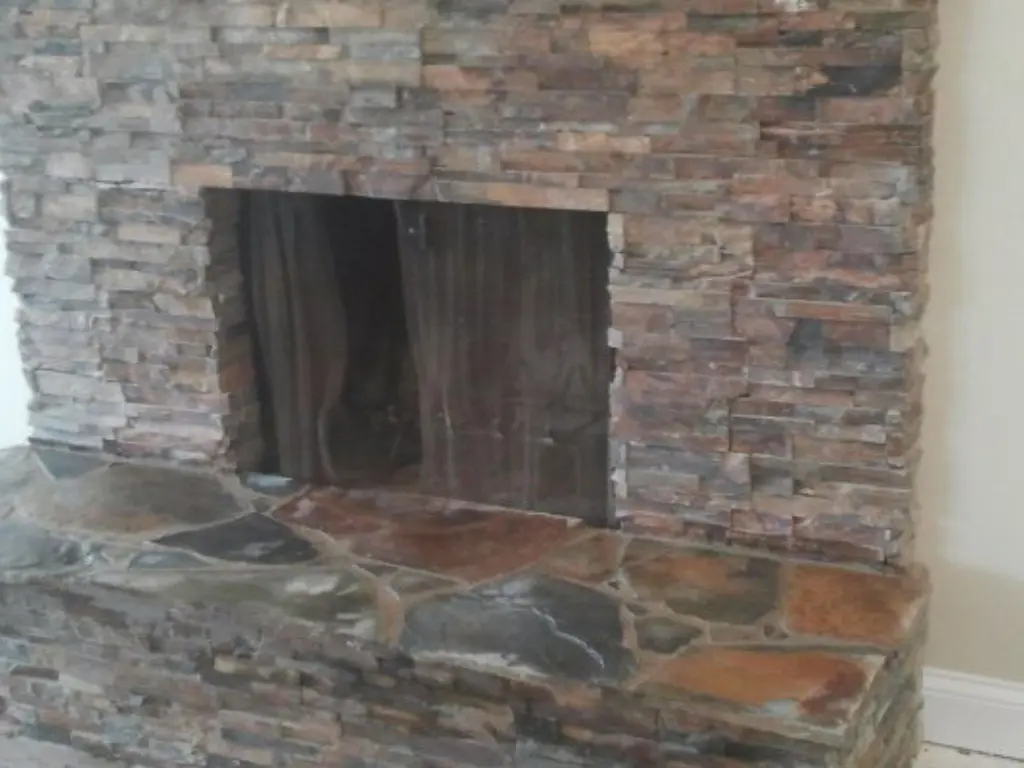
Stone and paver masonry work by Shaun Bagwell Masonry in San Diego
Let's Build It

Ready for Your Paver Project?

Whether you need a concrete paver driveway in San Carlos, a travertine pool deck in La Jolla, a brick walkway in Alpine, or a permeable paver patio in Carlsbad — Shaun Bagwell Masonry installs it to ICPI standards with the base preparation, edge restraints, and drainage that San Diego's soils demand.

C-29 Licensed CSLB #979389 ICPI Standards Free On-Site Estimates Workmanship Guarantee

Send us your project details — we respond within one business day.

Call the owner direct(619) 581-2492
Scroll to Top