
Patio Contractors San Diego — Stone, Paver & Concrete Patios for Year-Round Living
San Diego averages 266 sunny days per year — a properly built patio here is not a seasonal luxury, it is functional living space that buyers price as usable square footage. Concrete patios in San Diego return 70 to 90 percent of their cost at resale, well above the national average, because homeowners actually use them twelve months a year. Shaun Bagwell Masonry is a C-29 licensed masonry contractor (CSLB #979389) with over 25 years of experience designing and installing stone, paver, and concrete patios across San Diego County. Call (619) 581-2492 — you reach the owner directly.
Patio Materials We Install — Matched to San Diego's Climate
Not every patio material performs the same under San Diego's intense UV, coastal salt air, and expansive clay soils. We recommend materials based on your property's specific exposure, your home's architecture, and how you plan to use the space. Pick a surface to compare.
Natural Flagstone
Irregular shapes and earthy tones that blend naturally into San Diego's landscape. Flagstone can be dry-laid on a gravel base for a rustic, garden-path look or mortar-set on a concrete slab for a more permanent, formal surface. Mortar-set is the stronger choice on San Diego's expansive clay soils — dry-laid installations shift more over time when the ground moves seasonally. Flagstone suits Spanish Colonial, Mediterranean, and naturalistic designs common across La Jolla, Rancho Santa Fe, and Point Loma.
Travertine
A dense natural limestone that stays 20 to 30 degrees cooler than dark concrete pavers in direct sun — making it the best choice for pool-adjacent patios and south-facing entertaining areas. Travertine requires sealing every 3 to 5 years, especially on coastal properties in Pacific Beach and Del Mar where salt air accelerates moisture absorption.
Concrete Pavers
The most versatile option. Concrete pavers come in hundreds of shapes, colors, and textures — from clean modern lines to tumbled old-world patterns. They resist salt-air corrosion, handle San Diego's thermal cycling without cracking, and if a single unit gets damaged, you lift and replace just that piece.
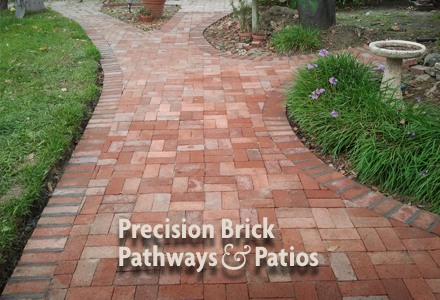
Brick Pavers
Classic fired-clay brick delivers a warm, traditional look that pairs naturally with San Diego's Spanish Colonial and Craftsman-era homes found throughout North Park, Hillcrest, Kensington, and Mission Valley. Slightly porous — benefits from sealing in coastal neighborhoods.
Poured Concrete
The most affordable patio surface. A standard broom-finish concrete slab is clean, durable, and low-maintenance. Stamped concrete can mimic stone or brick patterns at lower cost, but we are upfront about a tradeoff: San Diego's thermal cycling — cool nights and hot afternoons — stresses stamped concrete more than most climates. Expect hairline cracking and resealing every 2 to 3 years. For a primary outdoor living surface, natural stone or pavers hold up better long-term in this market.
What Patios Cost in San Diego — 2026 Pricing
Pick a material and drag the size slider to see what your patio should cost, then check the full price guide below.
Concrete pavers · 300 sq ft
- Patio surface installed$5,400 – $9,000
- Demolition & haul-awayNot included
- Cost per square foot$18 – $30
Includes base preparation, material, labor, edge restraints, and basic grading. It does not include retaining walls, built-in seating, fire pits, or outdoor lighting — those are quoted separately.
Get This Priced Exactly →2026 San Diego Patio Price Guide
Installed · base prep + material + labor| Material | Installed cost (per sq ft) | 300 sq ft patio | 500 sq ft patio |
|---|---|---|---|
| Poured concrete (broom finish) | $6 – $10 | $1,800 – $3,000 | $3,000 – $5,000 |
| Stamped concrete | $12 – $25 | $3,600 – $7,500 | $6,000 – $12,500 |
| Concrete pavers | $18 – $30 | $5,400 – $9,000 | $9,000 – $15,000 |
| Brick pavers | $15 – $25 | $4,500 – $7,500 | $7,500 – $12,500 |
| Natural flagstone (mortar-set) | $20 – $35 | $6,000 – $10,500 | $10,000 – $17,500 |
| Travertine | $24 – $38 | $7,200 – $11,400 | $12,000 – $19,000 |
Installed cost per square foot
San Diego · 2026What Drives the Cost
Size and material are the two biggest factors. After that: access (tight backyards in older neighborhoods like El Cajon, North Park, or Hillcrest add labor hours for hand-carrying materials), demolition of an existing concrete slab ($2 to $6 per square foot for removal and haul), and whether drainage work is needed to redirect water away from your foundation.
Why a Patio Pays Back Here
Concrete patios in San Diego return 70 to 90 percent of their cost at resale, well above the national average, because homeowners actually use them twelve months a year. With 266 sunny days, buyers price a finished patio as usable square footage — not as landscaping.
How We Build Patios That Last on San Diego Soil
Most patio failures start below the surface. Tap any layer of the build-up to see what we do there — and why it matters on expansive clay.
Base Preparation
This is where most patio failures start. We excavate to the proper depth, remove native clay from the base zone, and install 4 to 6 inches of compacted Class II base rock. This is not optional in San Diego — it is the difference between a patio that lasts 5 years and one that lasts 50.
Compacted to 95% Density
We compact the base to 95 percent density before any paving material goes down. Loose base is what lets a surface dip, rock and open joints in its first winter — no amount of quality stone on top can compensate for a base that was never properly compacted.
Drainage & Slope
Every patio we build slopes a minimum of 1/4 inch per foot away from your home's foundation. San Diego's dry climate makes drainage seem like an afterthought — until a winter storm drops 2 inches in an hour and water pools against your house. Under San Diego Building Code Appendix J, you also cannot redirect stormwater drainage onto a neighboring property. We plan the slope and drainage path before the first shovel goes in.
Material Selection by Microclimate
San Diego is not one climate. Coastal properties in Pacific Beach and Point Loma deal with salt air and marine-layer moisture — travertine here needs proper sealing, and metal edge restraints should be stainless or coated. Inland properties in El Cajon, Alpine, and Ramona face wider temperature swings and more intense UV — concrete pavers with integral color (not surface-applied) resist fading better. We recommend materials matched to where your property actually sits, not a one-size-fits-all spec.
Bedding Course, Jointing & Edge Restraints
A screeded bedding course sets each unit to a true plane, and edge restraints lock the field so the perimeter cannot creep outward over time. Joints are filled and the surface sealed where the material calls for it — travertine every 3 to 5 years, brick in coastal neighborhoods.
San Diego's Expansive Clay
San Diego's expansive clay soils — found throughout the coastal plains, Mission Valley, Tierra Santa, and the marine terraces — expand when wet and shrink during dry months. A patio laid on unprepared clay will settle, crack, or heave within 12 to 24 months. That is exactly why the base zone gets excavated and replaced rather than paved over.
Base Preparation 4–6 IN
Excavate to depth, remove native clay from the base zone, install 4 to 6 inches of Class II base rock and compact to 95 percent density before any paving material goes down.
Drainage & Slope ¼ IN / FT
Minimum quarter-inch-per-foot fall away from the foundation, with a planned drainage path — and never redirected onto a neighbouring property, per San Diego Building Code Appendix J.
A patio laid on unprepared clay will settle, crack, or heave within 12 to 24 months. Base depth, compaction and slope are not upgrades on a proposal — they are the patio.
Patio Permits in San Diego
Most ground-level uncovered patios do not require a building permit in San Diego. Three numbers decide whether yours does.
Ground-level uncovered patios stay permit-exempt while the surface is not more than 30 inches above grade and drainage patterns onto a neighbour's property do not change.
Patio covers under 300 square feet are exempt from a building permit for single-family homes (City of San Diego Information Bulletin 206) — unless electrical work, the Coastal Overlay Zone, or environmentally sensitive land is involved.
If your patio project requires grading — moving more than 200 cubic yards of soil — a grading permit is triggered. On hillside lots where a retaining wall creates the level pad, separate permits and engineering apply.
No permit Usually Exempt
- Ground-level uncovered patios not more than 30 inches above grade
- Patios that leave existing drainage patterns unchanged
- Patio covers under 300 square feet on single-family homes
Permit When a Permit Is Required
- Patio covers over 300 square feet
- Any cover involving electrical work
- Projects in the Coastal Overlay Zone or on environmentally sensitive land
- Grading that moves more than 200 cubic yards of soil
- Patios that change drainage patterns onto a neighbouring property
We advise on all permit requirements during every estimate and handle the process when permits are needed.
Five Steps, No Hidden Fees
The same sequence on every patio we install across San Diego County.
Free On-Site Estimate
Call (619) 581-2492 or submit a request online. We visit your property, measure the area, assess soil and drainage, and discuss material options.
Written Proposal
Itemized scope with material, labor, base preparation, drainage, timeline, and total cost. No hidden fees.
Material Selection
Physical samples of stone, pavers, or concrete finishes so you can see how they look against your home before committing.
Construction
Excavation, base preparation, compaction, material installation, edge restraints, jointing, and sealing where applicable.
Cleanup & Walkthrough
Clean site, final inspection together, maintenance instructions, and warranty documentation.
Frequently Asked Questions
Cost, permits, materials and timelines — what San Diego homeowners ask before they build.
A basic concrete patio costs $6 to $10 per square foot installed. Concrete pavers run $18 to $30. Natural flagstone and travertine range from $20 to $38 per square foot. A typical 300-square-foot patio costs $1,800 to $11,400 depending on material. We provide a free written estimate with exact pricing for your project.
Most ground-level uncovered patios do not require a building permit. Permits are needed for patio covers over 300 square feet, structures in the Coastal Overlay Zone, projects involving grading over 200 cubic yards, or patios that change drainage patterns onto neighboring properties.
It depends on your location and use. Travertine stays coolest in direct sun — ideal for pool areas. Concrete pavers offer the widest design flexibility and easiest repairs. Flagstone provides a natural look that suits San Diego's Spanish Colonial architecture. We recommend materials based on your property's microclimate, sun exposure, and style.
A standard 300 to 500 square foot patio takes 1 to 2 weeks from excavation to finished surface. Larger projects or those requiring retaining walls, drainage work, or permits may take 3 to 4 weeks. We include a clear timeline in every proposal.
Yes. Demolition and removal of an existing concrete slab typically costs $2 to $6 per square foot, depending on thickness and access. We handle the full scope — demo, haul, base prep, and new installation.
No question matches that search. Call (619) 581-2492 and ask us directly.
Ready to Build Your Patio?
Whether you want a flagstone entertaining area in San Carlos, a travertine surface around your pool in La Jolla, a concrete paver patio in El Cajon, or a simple concrete slab in Chula Vista — Shaun Bagwell Masonry builds it to last in San Diego's climate.
Send us your project details — we respond within one business day.
Call the owner direct(619) 581-2492